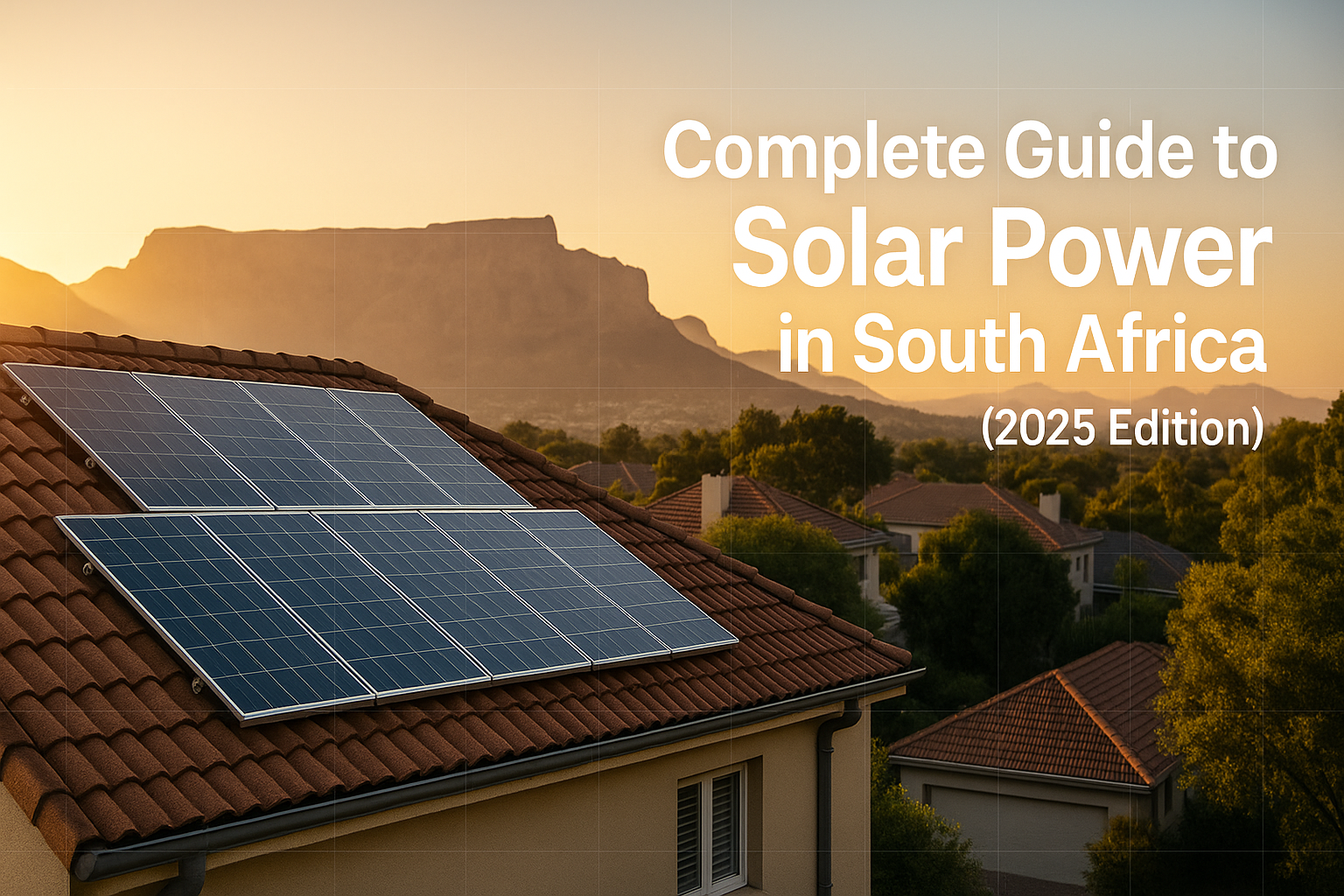
Why solar in 2025?
Solar adoption is accelerating across South Africa. Beyond just backup during load-shedding, systems are now delivering long-term cost savings. With Eskom tariffs rising above inflation, solar offers households a way to stabilise energy costs. It also reduces reliance on diesel generators and aligns with the country’s push toward cleaner energy.
- Load-shedding resilience: maintain normal life even during blackouts.
- Financial hedge: protect against Eskom’s yearly tariff hikes.
- Sustainability: shrink your carbon footprint with renewable power.
- Capital cost: high upfront outlay still a barrier for many households.
How solar works
A complete solar PV system includes panels, an inverter, batteries (optional but common), and balance-of-system components such as cabling, isolators, and distribution boards. During the day, panels produce electricity. The inverter converts it into AC. Batteries store excess energy for night or outages. Grid-tied setups can feed surplus into the municipal grid where net-metering is allowed.
Solar panel types (2025)
- Monocrystalline (Mono): High efficiency (20–23%), smaller footprint, slightly more costly.
- Polycrystalline (Poly): Cheaper, lower efficiency (~16–18%), being phased out in premium installs.
- Bifacial: Capture light from both sides, best for ground-mount or reflective rooftops.
- Thin-film: Lightweight, niche use for caravans, low roofs, or curved surfaces.
Inverters explained
The inverter is the “brain” of the system. Options in SA 2025:
- Grid-tied: Cheapest, no batteries, feeds excess into grid (requires municipal approval).
- Hybrid: Most common in homes; combines grid, solar, and batteries seamlessly.
- Off-grid: For remote areas with no Eskom connection, requires large batteries and backup generator.
Top brands in SA: Sunsynk, Deye, Victron, and Huawei FusionSolar.
Battery storage
Batteries store solar energy for night-time and outages. In 2025, lithium iron phosphate (LiFePO4 / LFP) has become the standard, offering 6000+ cycles and 10+ year warranties. Lead-acid remains only in budget systems.
| Chemistry | Lifespan | Pros | Cons |
|---|---|---|---|
| Lithium LFP | 10–15 years | Safe, long life, deep discharge | Higher upfront cost |
| Lead-acid (AGM/Gel) | 3–5 years | Cheaper upfront | Poor cycle life, bulky |
System sizing
Match system size to your household load profile. Oversizing wastes money; undersizing leaves you stuck in the dark.
| Household | Panels | Battery | Use case |
|---|---|---|---|
| Apartment | 3–5 kW | 5–10 kWh | Essentials only |
| Family home | 5–8 kW | 10–20 kWh | Lights + appliances |
| Large home | 8–15 kW | 20–40 kWh | Near off-grid |
Costs & financing
By 2025, banks and installers offer multiple financing paths. Expect:
- Cash purchase: highest upfront, lowest lifetime cost.
- Bank loans: “Green loans” over 5–7 years, repayments often match electricity savings.
- Rent-to-own / PPAs: Installer owns system, you pay monthly, can upgrade later.
Payback periods average 5–7 years for middle-income homes.
Choosing an installer
Pick carefully — poor installs cause fires, insurance issues, or system underperformance.
- Use DoE-registered electricians with solar PV certificates.
- Check SAPVIA/P4 Platform for accredited installers.
- Insist on a written design and load assessment before quotation.
- Request warranties for both product and workmanship.
Maintenance & lifespan
- Panels: 20–25 year life, wash 2–4 times per year.
- Inverters: 10–15 year lifespan, may need one replacement per system lifetime.
- Batteries: 8–15 years depending on cycles and chemistry.
Smart monitoring apps now help households track production, battery health, and Eskom savings.
Regulations & compliance
South Africa tightened compliance rules in 2024:
- Municipal registration: mandatory in major metros.
- Certificate of Compliance (CoC): required for resale and insurance claims.
- SANS 10142-1-2: governs PV installation wiring standards.
Trends for 2025
- Community microgrids in estates and complexes.
- Second-life EV batteries entering the market for affordable storage.
- Smart load management with IoT devices to prioritise critical appliances.
- Government rebates continuing but limited to capped system sizes.
FAQ
Can I export to the grid?
In Cape Town and a few metros, yes. Elsewhere, export is limited or not yet allowed.
What happens in cloudy weather?
Production drops, but panels still generate 10–30% on overcast days. Batteries cover gaps.
How do I protect against lightning?
Surge arrestors and correct earthing are mandatory. Insurance may require proof.
This guide is informational. Always use a registered electrician and comply with SANS 10142 and municipal by-laws when installing solar.