Roof-mounted systems
Most South African homes use roof-mount systems. Rails are attached to roof trusses, and panels fixed at optimal tilt. Key differences:
- Pitched tile/IBR roofs: Rail kits with hooks/clamps.
- Flat concrete roofs: Ballast or angled frames to achieve tilt.
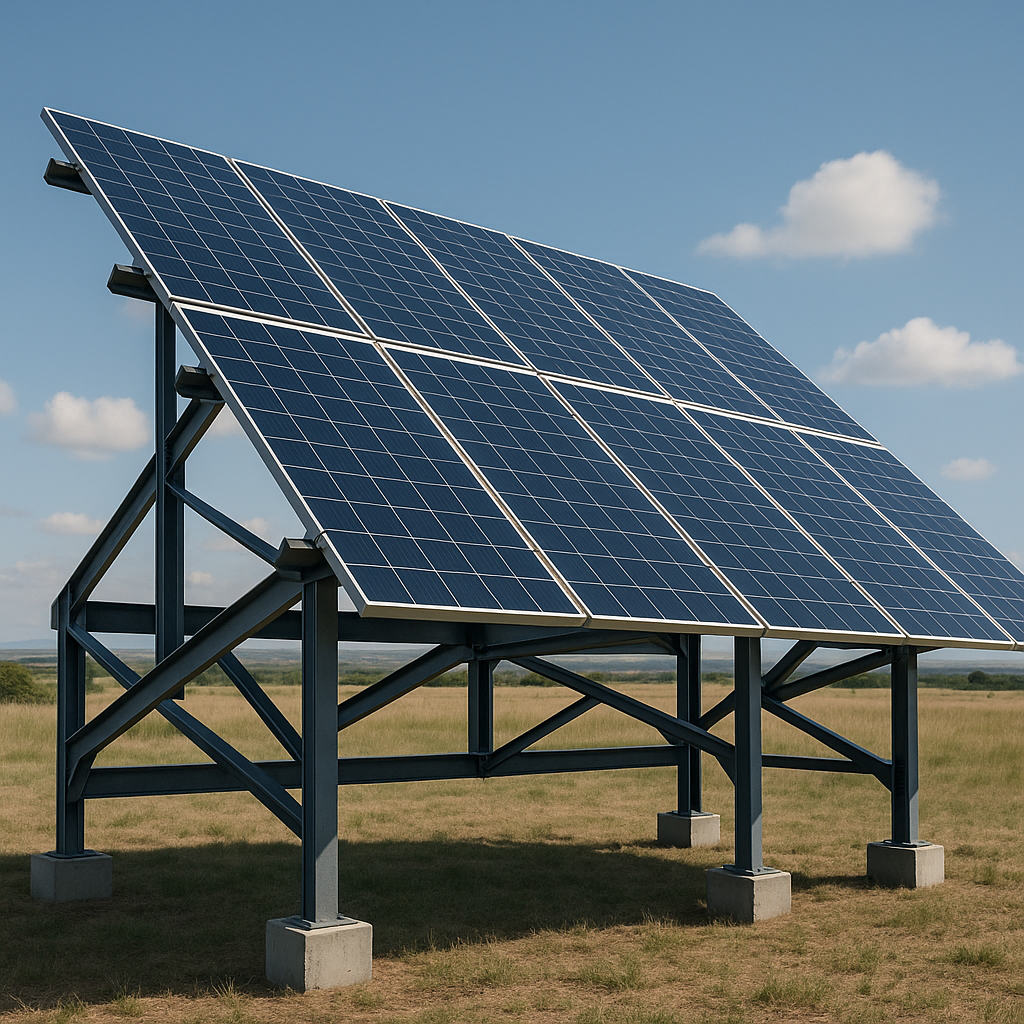
Ground-mount systems
Ground-mounts allow flexible tilt, easier cleaning, and expansion. They require land and foundation work, but suit farms and large properties.
Solar carports
Carports provide dual use — shading vehicles and generating energy. Popular for estates and businesses with parking space.
Custom steel mounts
Where roofs are unsuitable or when unique layouts are needed, custom fabricated steel structures provide a solution. BigTig specialises in pipeline welding and steel fabrication, offering durable and tailored solar mounting frames.
Costs & considerations
- Roof-mounts: R1,500–R3,000 per kW.
- Ground-mounts: R2,500–R4,500 per kW (foundation adds cost).
- Carports: R30,000+ depending on size and steel prices.
- Custom mounts: Quoted case-by-case, depends on steel and design complexity.
Choosing an installer
Always pick installers who understand structural load, corrosion protection, and wind ratings. Poorly designed mounts can fail in storms, voiding insurance.
- Use installers experienced with your roof type.
- Ask for SANS 10142-1-2 compliance and wind load calculations.
- For steel structures, confirm galvanisation or protective coatings.
This guide is informational. Always use registered installers and ensure compliance with SANS standards and municipal by-laws.